Editors note:
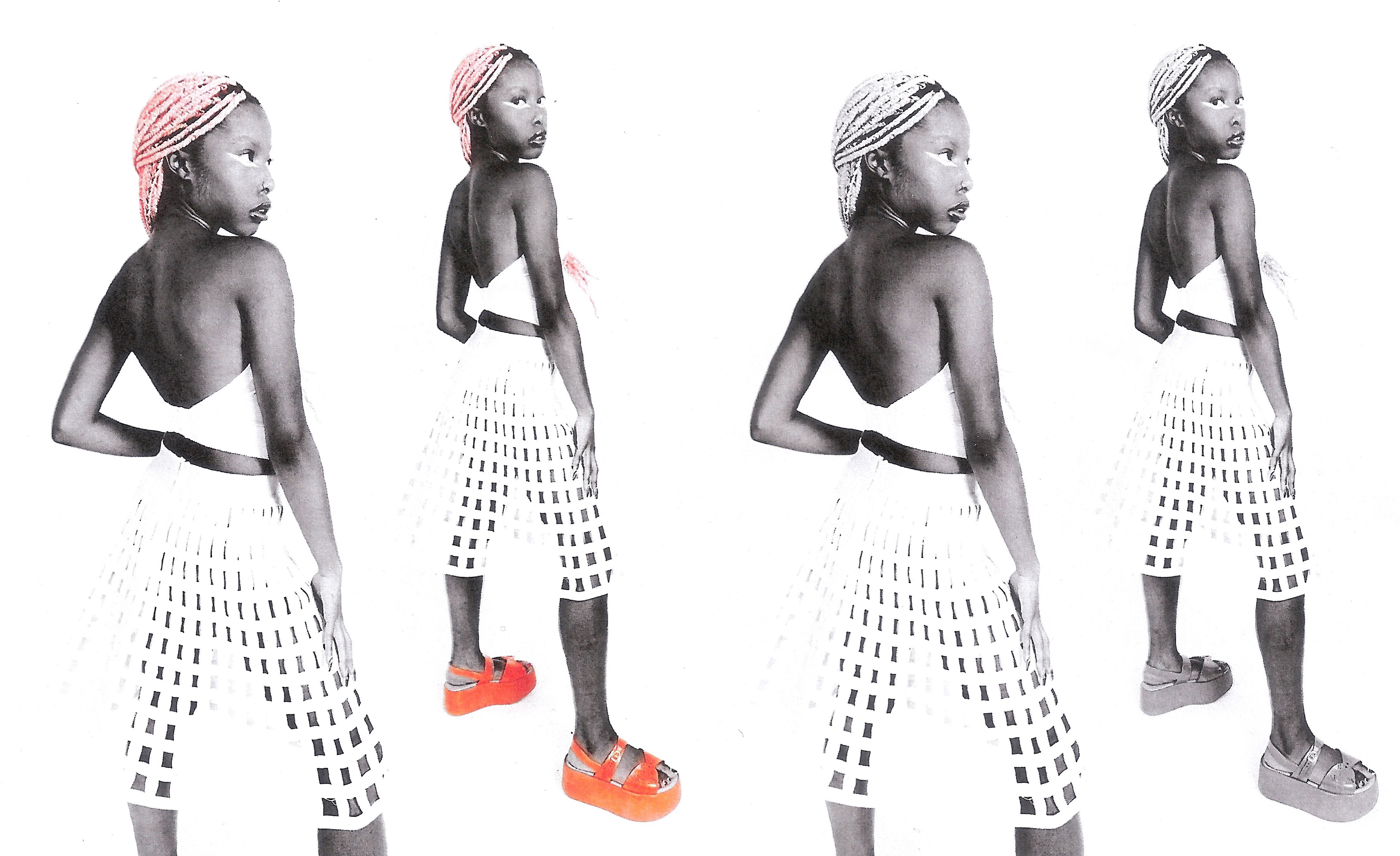
‍GOOBER is a response to the void of authentic content in the world currently. It is also an integration of my deep loves: essays, poetry, art direction, styling, modeling, music curation, fashion, print media, and self-expression. INDIVIDUATION, the first volume of GOOBER magazine is a deeply personal issue, as it chronicles the wisdom I’ve gained up to this point in my life, and the criticisms of society I gained along the way. I’m incredibly grateful to pull from writings I’ve been developing, ideas that sparked in conversation, and the landscape of Mexico City to create. Planting the seeds of GOOBER has brought me to amazing like-minded creatives and friends that contributed to this project by existing and inspiring me. This publication has been waiting to be birthed for almost 3 years, but production for this project took place over 5 months. I hope the writing, the imagery, and the heart resonate with you and inspire readers to SEE BEYOND societal narratives of popularity. I want people to rip up the pages of this zine and paste them onto their walls, as I do. If you're reading this, thank you for participating. 
Sincerely, Sp8ce.kadet

Welcome to the online zine

Goober

The lack of authenticity in our society continues to grow into a raging epidemic.
For those looking for a cultural shift, look no further.

Our Manifesto:

1. This era is an era of striving for illusions. Nothing is real. Nothing is sacred.
2. The future that was promised to us has been ripped from underneath our feet. Let's be clear from the start...
3. We are natives of this digital era. We are tired and we are lost. We were born in this internet But are not of it.
4. Anything that the powers that be deem “groundbreaking” lacks purpose and Authenticity.
5. Our lives profit a fake reality. Our leaders die drained and corrupted.
6. You will find yourself devoid of life and creativity, with no place to go that's outside of your devices.
7. If you want to see beyond this nightmarish hellscape we call society: individuate yourself. Pursue individualism, break the barriers of what feels comfortably unsafe.
8. Opt-out. It's time to cut out the middleman. It's time to stop pleading for a spot in an outdated and overcrowded establishment. It's time to regain control of the narrative. We are GOOBER, and this is our manifesto
Listen along to our playlist as you read our articles

Part One:

The Culture

What people tend to praise on a mainstream level at least, is deeply inauthentic. People today are desensitized to art, culture, and branding because society uplifts a narrative that doesn't actually exist. This “inclusivity” being championed by everyone from Abercrombie to Valentino doesn't translate in real life, where people don’t care how fat or gay you are.

Especially considering the decision-makers at profiting distribution groups don't reflect the models they hire. You can see the inauthenticity on social media, Vogue, on the runway, and eCommerce: it shows. When I buy clothes, I’m not purchasing anything to showcase my trendiness or identity. I don’t want to think about who wore it before: I’m thinking about what is cool and original. The majority is not thinking this way.
Brands are not completely at fault, as their job is to supply a demand. It is up to the consumer to discern whether or not a brand using identity to peddle clothing is authentic or not. For the population that would rather not delve into aesthetics and their symbiosis to capitalism, or the people who claim to “not care” about clothing: YOU are not above this conversation, everyone everywhere is making a fashion statement, even when they do not think so.

For this reason, it's important to question what we are calling “fashion” because it is reflective of the society we live in. There are people all over the world tailoring their wardrobes to their peers and the celebrities hired by brands marketing to them. There is much to hate about how fashion is currently translated to people. You don’t have to think, you don't have to try, because there are a million people showing you the exact way to style something you buy. Society is a perpetuation of hype.
Looking just like everyone else is a status symbol. Despite the amount of celebrity-worship content we see every day, in reality: the pattern of clothing worn by models, actors, musicians, and influencers determining “style” is growing obsolete. Among fashion enthusiasts, there is an energy of cynicism around trends, a growing divide between people who need the machine to tell them what to wear, and those who don't care to aspire to something stale.The fantasy of fashion is no longer hopeful, but lustful.

Would you care about your favorite brand if it wasn’t worn by celebs?
If it was affordable? 
If it credited the cultures it derived its design inspiration from?
The truth is no, you wouldn't. Where do we go from here?
Fashion sense has become something that is determined by follower count. The more followers an influencer has of people without the privilege of accessing hype, the more dick-riding they inevitably receive.

If half the people posting fashion content encouraged individuality instead of showcasing their proximity, the more regular people would start to think for themselves. You don’t get extra points for being an individual, having a unique or personal style isn’t a trend, it's a lifestyle. 

If you can program someone into wearing things because you market them, you own their perceived identity.
Whether you are owned by Shein or Vivienne Westwood, be aware of your captors.
Dress for yourself.
Think critically and see what follows. 
What people tend to praise on a mainstream level at least, is deeply inauthentic. People today are desensitized to art, culture, and branding because society uplifts a narrative that doesn't actually exist. This “inclusivity” being championed by everyone from Abercrombie to Valentino doesn't translate in real life, where people don’t care how fat or gay you are.

Especially considering the decision-makers at profiting distribution groups don't reflect the models they hire. You can see the inauthenticity on social media, Vogue, on the runway, and eCommerce: it shows. When I buy clothes, I’m not purchasing anything to showcase my trendiness or identity. I don’t want to think about who wore it before: I’m thinking about what is cool and original. The majority is not thinking this way.

Brands are not completely at fault, as their job is to supply a demand. It is up to the consumer to discern whether or not a brand using identity to peddle clothing is authentic or not. For the population that would rather not delve into aesthetics and their symbiosis to capitalism, or the people who claim to “not care” about clothing: YOU are not above this conversation, everyone everywhere is making a fashion statement, even when they do not think so.

For this reason, it's important to question what we are calling “fashion” because it is reflective of the society we live in. There are people all over the world tailoring their wardrobes to their peers and the celebrities hired by brands marketing to them. There is much to hate about how fashion is currently translated to people. You don’t have to think, you don't have to try, because there are a million people showing you the exact way to style something you buy. Society is a perpetuation of hype.

Looking just like everyone else is a status symbol. Despite the amount of celebrity-worship content we see every day, in reality: the pattern of clothing worn by models, actors, musicians, and influencers determining “style” is growing obsolete. Among fashion enthusiasts, there is an energy of cynicism around trends, a growing divide between people who need the machine to tell them what to wear, and those who don't care to aspire to something stale.The fantasy of fashion is no longer hopeful, but lustful.

Would you care about your favorite brand if it wasn’t worn by celebs?
If it was affordable? 
If it credited the cultures it derived its design inspiration from?
The truth is no, you wouldn't. Where do we go from here?

Fashion sense has become something that is determined by follower count. The more followers an influencer has of people without the privilege of accessing hype, the more dick-riding they inevitably receive.

If half the people posting fashion content encouraged individuality instead of showcasing their proximity, the more regular people would start to think for themselves. You don’t get extra points for being an individual, having a unique or personal style isn’t a trend, it's a lifestyle. 

If you can program someone into wearing things because you market them, you own their perceived identity.
Whether you are owned by Shein or Vivienne Westwood, be aware of your captors.
Dress for yourself.
Think critically and see what follows. 
Dress for yourself.
Think critically and see what follows.


Zine unfolded showing spine and covers

Part Two:

Internet Fashion

Proximity is what we all want. It doesn’t have to be the same kind always, but in visual culture, it is increasingly more valuable to have access to the one-shot image that is most sought after. The farther you are from this relegated image, the farther you are from society itself. Growing up in this visual culture, I was so constantly aware of the proximity I lacked: proximity to whiteness, financial wealth, proximity to a large social media following, and male validation has always seemed so far away. I know others can relate. 

Fashion has always been constantly evolving and growing. However, current trend cycles only seem to be growing more and more unattainable to achieve. Whenever it seems to be in reach, there's always a straighter, richer, skinnier, whiter persona that manages to grasp it quicker than the rest of us undesirables. Participating in trends usually only supports a specific demographic, and it's never the demographic that originated it.

2017 brought a nouveau indie “soft” aesthetic on-trend. People streaked excessive blush on their faces and wore backpacks with high-waisted jeans and vans. People bought hydro-flasks and pretended to care about climate change and bees. Then the “E-girl” aesthetic, a softer motif of 2000s emo and pop-punk silhouettes seemed to flood all our feeds. COVID-19 only quickened the trend cycle and shortened everyone’s attention span. 2000s nostalgia saturated everything.

What is now considered Y2K: to the influencers, and uneducated TikTok consumers, is usually credited to paparazzi shots of a waif, young Paris Hilton. In reality, this aesthetic was pioneered by black artists, who are often scrutinized for their inappropriateness. I don't blame the masses, but the informants. Lil Kim, Aaliyah, etc, talented and stylish as they are, will never sell more Von Dutch and Blumarine than any nepotism baby.

In 2020, people flocked to darker trends as well. Artists like Kanye West and other rappers brought a younger audience to designers and brands like Junya Watanabe for Comme Des Garcons and Rick Owens. This industrial aesthetic rooted in anti-fashion and punk ideologies became mainstream. People draped themselves in overpriced confusing neutrals and thought they were so special because of it.

Mid-2021 this began to evolve, and the “subversive basics” trend exploded. Influenced by Glenn Marten's recent collections for Y-project and Gualtier itself, Screen-printed body-outline garments reminiscent of 90s JPG became all the rage. Diesel’s 2022 fall/winter collection, the infamous Miu Miu Spring 2022 collection, Balenciaga, and the “model-off-duty” aesthetic, are currently all over everyone, but due to the pattern illustrated here, I doubt that will last.  
This is not to say people haven't fully committed to these aesthetics, or that all people mindlessly jump from trend to trend, but the majority have. Society’s nonchalance to the amount of waste microtrends generate is pretty damning.

The brands I've listed previously are simply not affordable for the majority, so people settle for fast-fashion dupes. The globalization of sites like Amazon and Shein, which provide trends at cheap prices gives instant gratification to those who get FOMO at their favorite celebrities. However, this is at the expense of garment quality, purchases from those sites don't survive a couple of laundry loads. 

What are we to do, when the people granted “internet influence” or “TikTok fame” are using them to uphold the trend cycle and generally promote things I wouldn't expose to my younger sibling and especially not my future children.
Gen Z isn’t wise, we are not less impressionable, more media literate, or smarter than our parents, who are unfortunately just as lost as us.


If anything, internet culture has numbed us to the harsher truths of its usage; my screen time reports are proof of this. I’d like to believe that I’m above it, but most of the time I spend online is spent scrolling mindlessly, wondering what people think of me, resentful of the algorithms that hold me hostage.

There is also something to be said of intellectual property. I wonder if designers grow existential about their craft, what's the point of attempting to be original if everyone wants the same old thing, especially when it can be replicated and mass-produced basically overnight. Is the replication of aesthetics popularized in previous decades sustainable?

Not to say there isn't room for innovation, however, it seems that lately what we rage over is reminiscent of a simpler time, a time without social media, pandemics, and a shadowing threat of climate demise. It's hard to pinpoint exactly what 2022 fashion actually is. It's hard to pinpoint it because no one is doing anything lasting on a mainstream level. Brands or items go viral, but after the 3-week spasm subsides, you can hardly recall what the garment actually was. Or worse, the clothing we buy feels devoid of meaning the second we put it on.

Microtrends are merely fashion’s response to this culture of instant gratification we live in, something more entertaining is always around the corner. If recent fashion has proved anything, it's that personal style is in hospice.
Proximity is what we all want. It doesn’t have to be the same kind always, but in visual culture, it is increasingly more valuable to have access to the one-shot image that is most sought after. The farther you are from this relegated image, the farther you are from society itself. Growing up in this visual culture, I was so constantly aware of the proximity I lacked: proximity to whiteness, financial wealth, proximity to a large social media following, and male validation has always seemed so far away. I know others can relate. 

Fashion has always been constantly evolving and growing. However, current trend cycles only seem to be growing more and more unattainable to achieve. Whenever it seems to be in reach, there's always a straighter, richer, skinnier, whiter persona that manages to grasp it quicker than the rest of us undesirables. Participating in trends usually only supports a specific demographic, and it's never the demographic that originated it.

2017 brought a nouveau indie “soft” aesthetic on-trend. People streaked excessive blush on their faces and wore backpacks with high-waisted jeans and vans. People bought hydro-flasks and pretended to care about climate change and bees. Then the “E-girl” aesthetic, a softer motif of 2000s emo and pop-punk silhouettes seemed to flood all our feeds. COVID-19 only quickened the trend cycle and shortened everyone’s attention span. 2000s nostalgia saturated everything.

What is now considered Y2K: to the influencers, and uneducated TikTok consumers, is usually credited to paparazzi shots of a waif, young Paris Hilton. In reality, this aesthetic was pioneered by black artists, who are often scrutinized for their inappropriateness. I don't blame the masses, but the informants. Lil Kim, Aaliyah, etc, talented and stylish as they are, will never sell more Von Dutch and Blumarine than any nepotism baby.

In 2020, people flocked to darker trends as well. Artists like Kanye West and other rappers brought a younger audience to designers and brands like Junya Watanabe for Comme Des Garcons and Rick Owens. This industrial aesthetic rooted in anti-fashion and punk ideologies became mainstream. People draped themselves in overpriced confusing neutrals and thought they were so special because of it.

Mid-2021 this began to evolve, and the “subversive basics” trend exploded. Influenced by Glenn Marten's recent collections for Y-project and Gualtier itself, Screen-printed body-outline garments reminiscent of 90s JPG became all the rage. Diesel’s 2022 fall/winter collection, the infamous Miu Miu Spring 2022 collection, Balenciaga, and the “model-off-duty” aesthetic, are currently all over everyone, but due to the pattern illustrated here, I doubt that will last.  

This is not to say people haven't fully committed to these aesthetics, or that all people mindlessly jump from trend to trend, but the majority have. Society’s nonchalance to the amount of waste microtrends generate is pretty damning.

The brands I've listed previously are simply not affordable for the majority, so people settle for fast-fashion dupes. The globalization of sites like Amazon and Shein, which provide trends at cheap prices gives instant gratification to those who get FOMO at their favorite celebrities. However, this is at the expense of garment quality, purchases from those sites don't survive a couple of laundry loads. 

What are we to do, when the people granted “internet influence” or “TikTok fame” are using them to uphold the trend cycle and generally promote things I wouldn't expose to my younger sibling and especially not my future children.
Gen Z isn’t wise, we are not less impressionable, more media literate, or smarter than our parents, who are unfortunately just as lost as us.

If anything, internet culture has numbed us to the harsher truths of its usage; my screen time reports are proof of this. I’d like to believe that I’m above it, but most of the time I spend online is spent scrolling mindlessly, wondering what people think of me, resentful of the algorithms that hold me hostage.

There is also something to be said of intellectual property. I wonder if designers grow existential about their craft, what's the point of attempting to be original if everyone wants the same old thing, especially when it can be replicated and mass-produced basically overnight. Is the replication of aesthetics popularized in previous decades sustainable?

Not to say there isn't room for innovation, however, it seems that lately what we rage over is reminiscent of a simpler time, a time without social media, pandemics, and a shadowing threat of climate demise. It's hard to pinpoint exactly what 2022 fashion actually is. It's hard to pinpoint it because no one is doing anything lasting on a mainstream level. Brands or items go viral, but after the 3-week spasm subsides, you can hardly recall what the garment actually was. Or worse, the clothing we buy feels devoid of meaning the second we put it on.

Microtrends are merely fashion’s response to this culture of instant gratification we live in, something more entertaining is always around the corner. If recent fashion has proved anything, it's that personal style is in hospice.

Gen Z isn’t wise, we are not less impressionable, more media literate, or smarter than our parents, who are unfortunately just as lost as us.

Part Three:

My style journey
(to an extent)

Born in the early 2000s, its whiny club hits and plunging silhouettes that were the height of pop culture at the time felt like an elusive faraway world. A world that I was too young to witness in its most villainous state and that my Afrocentric parents were hell-bent on shielding me from for as long as possible. However, it did little to prevent me from becoming the pink-obsessed primadonna that I was and in many ways still am.

Style, fashion, and outward presentation is often the defining factor in the books we choose to judge by their covers. Charisma, smarts, and talent are all fine and good–but often never understood at face value. I find it imperative to continue by taking us on a journey. The journey of a tiny, big-eyed girl whose earliest ethos was found in cheap plastic heels and tiaras and itchy dollar-tree feather boas gifted to me by my grandmother.

Early internet entertainment for little girls included sites like girlsgogames.com where I played as a white character (there weren’t any that looked like me) picking out her makeup, outfits, and heels for her imaginary movie premiere. At the same time, my parents worked for nonprofits teaching Oakland youth about hip-hop and sustainability.
I found myself at a young age conflicted by my “whiter” interests and the “social justice warrior” world I was birthed into. 

For so long, I only wanted to please all the people around me. It wasn’t until middle school, that I began to transmute my awkwardness into bitchyness and simultaneously discovered Daria, Bikini Kill, and Odd Future. I dived headfirst into becoming a grungy, apathetic, skater-type, and rejected all the objects of femininity that consumed me for so long. I dressed in flannel, skate tees, plaid skirts, studded denim vests, vans, and baggy jeans. Lack of reflection in the world surrounding me caused me to resent my 5-foot stature, baby fat, and chubby cheeks. I struggled with anxiety, depression, bulimia, self-harm, and severe insecurity during this time. Ironically, it was the height of my academic career, I found I was a skilled writer and wooed my way into a presidential scholarship at a suburban, catholic high school 45 minutes by train from my West Oakland home. 
Obviously, it wasn't a good environment, but it did wonders in the formation of my style identity. The summer before my freshman year, the show Euphoria came out on HBO. I was instructed by a family friend not to watch it, so of course, I watched it entirely. By the first day of school, I was already tainting my school polos with Brandy Melville miniskirts, platform doc martens, and glitter eyeshadow. I convinced my mother to let me bleach my hair and turned it green, then blonde again, then pink and green, then pink and blue. Sitting in mass with purple eyes felt like an amazing personal rebellion, but alienated me from my catholic-raised classmates.

School reflected this paradox: I attended a white “liberal” private school for kindergarten, and then an African-centered private school that valued grooming black youth into “scholars” from second to eighth grade. Neither proved to be useful in me discovering who I was because the extremes in these environments only highlighted how clearly I didn’t fit into either.

By winter break I was eating lunch in the bathroom and waiting for the bell to ring so I could take BART home, change out of my clothes, and smoke weed with my older friends at the skate park near my house. I was over pretending that I cared about school, instead, I focused on my Snapchat story, and seeing the music I liked at local venues.
The pandemic forced me inside to reflect on my identity and my interests. In my sophomore year, I began to evolve stylistically, finding a balance between the skate silhouettes I loved like dickies and slacks, pairing them with homemade tank tops, oversized sweaters with fishnet tights, and downsized my glitter eyes, opting for smudged eyeliner that was more reminiscent of Skins than Euphoria.

For the first time, it was silent enough that I could hear what my inner self really craved. An opportunity to rediscover clothing without having to care about what my outer environment thinks about how I look. I wasn't paying attention to the hottest shows at NYFW, active on high fashion Twitter, or Vogue Runway either. 
Proximity is what we all want. It doesn’t have to be the same kind always, but in visual culture, it is increasingly more valuable to have access to the one-shot image that is most sought after. The farther you are from this relegated image, the farther you are from society itself. Growing up in this visual culture, I was so constantly aware of the proximity I lacked: proximity to whiteness, financial wealth, proximity to a large social media following, and male validation has always seemed so far away. I know others can relate. 

Fashion has always been constantly evolving and growing. However, current trend cycles only seem to be growing more and more unattainable to achieve. Whenever it seems to be in reach, there's always a straighter, richer, skinnier, whiter persona that manages to grasp it quicker than the rest of us undesirables. Participating in trends usually only supports a specific demographic, and it's never the demographic that originated it.

2017 brought a nouveau indie “soft” aesthetic on-trend. People streaked excessive blush on their faces and wore backpacks with high-waisted jeans and vans. People bought hydro-flasks and pretended to care about climate change and bees. Then the “E-girl” aesthetic, a softer motif of 2000s emo and pop-punk silhouettes seemed to flood all our feeds. COVID-19 only quickened the trend cycle and shortened everyone’s attention span. 2000s nostalgia saturated everything.

What is now considered Y2K: to the influencers, and uneducated TikTok consumers, is usually credited to paparazzi shots of a waif, young Paris Hilton. In reality, this aesthetic was pioneered by black artists, who are often scrutinized for their inappropriateness. I don't blame the masses, but the informants. Lil Kim, Aaliyah, etc, talented and stylish as they are, will never sell more Von Dutch and Blumarine than any nepotism baby.

In 2020, people flocked to darker trends as well. Artists like Kanye West and other rappers brought a younger audience to designers and brands like Junya Watanabe for Comme Des Garcons and Rick Owens. This industrial aesthetic rooted in anti-fashion and punk ideologies became mainstream. People draped themselves in overpriced confusing neutrals and thought they were so special because of it.

Mid-2021 this began to evolve, and the “subversive basics” trend exploded. Influenced by Glenn Marten's recent collections for Y-project and Gualtier itself, Screen-printed body-outline garments reminiscent of 90s JPG became all the rage. Diesel’s 2022 fall/winter collection, the infamous Miu Miu Spring 2022 collection, Balenciaga, and the “model-off-duty” aesthetic, are currently all over everyone, but due to the pattern illustrated here, I doubt that will last.  

This is not to say people haven't fully committed to these aesthetics, or that all people mindlessly jump from trend to trend, but the majority have. Society’s nonchalance to the amount of waste microtrends generate is pretty damning.

The brands I've listed previously are simply not affordable for the majority, so people settle for fast-fashion dupes. The globalization of sites like Amazon and Shein, which provide trends at cheap prices gives instant gratification to those who get FOMO at their favorite celebrities. However, this is at the expense of garment quality, purchases from those sites don't survive a couple of laundry loads. 

What are we to do, when the people granted “internet influence” or “TikTok fame” are using them to uphold the trend cycle and generally promote things I wouldn't expose to my younger sibling and especially not my future children.
Gen Z isn’t wise, we are not less impressionable, more media literate, or smarter than our parents, who are unfortunately just as lost as us.

If anything, internet culture has numbed us to the harsher truths of its usage; my screen time reports are proof of this. I’d like to believe that I’m above it, but most of the time I spend online is spent scrolling mindlessly, wondering what people think of me, resentful of the algorithms that hold me hostage.

There is also something to be said of intellectual property. I wonder if designers grow existential about their craft, what's the point of attempting to be original if everyone wants the same old thing, especially when it can be replicated and mass-produced basically overnight. Is the replication of aesthetics popularized in previous decades sustainable?

Not to say there isn't room for innovation, however, it seems that lately what we rage over is reminiscent of a simpler time, a time without social media, pandemics, and a shadowing threat of climate demise. It's hard to pinpoint exactly what 2022 fashion actually is. It's hard to pinpoint it because no one is doing anything lasting on a mainstream level. Brands or items go viral, but after the 3-week spasm subsides, you can hardly recall what the garment actually was. Or worse, the clothing we buy feels devoid of meaning the second we put it on.

Microtrends are merely fashion’s response to this culture of instant gratification we live in, something more entertaining is always around the corner. If recent fashion has proved anything, it's that personal style is in hospice.

I found myself at a young age conflicted by my
“whiter” interests and the “social justice warrior” world I was birthed into. 

Part Four:

American Culture and its influence

Summer before my junior year, I moved to Mexico City. I had always wanted to live in a bigger city, away from the shadow of my parents' contributions to the Bay Area. As they say, be careful what you wish for: I got what I wanted, at the cost of leaving everything I had known behind. An international lifestyle also brought homeschooling into my life, which allowed me to use my educational time to hone my craft.

During this time, my style transformed into what it is now: effortless, yet a culmination of all the previous iterations of self. Vintage, subversive basics, graphic tees, miniskirts, plaids in all forms, as well as blazers, flare pants, buffalo trainers, converse, platform boots, colored hair, and eyeliner make up my current everyday style. 

Living in a foreign country, especially one so close to the US, opened my eyes to another kind of influence plaguing the “third world”, which is, of course, Americanization. Many Mexicans live their lives head to toe in American brands, sometimes knockoff, but always logoed.

Department stores in Mexico promote classically American companies such as Coach, Ralph Lauren, and Nike. Peers I’ve asked confide in me that the majority of shopping they do takes place at H&M, Zara, and Berksha.

Unsurprisingly, old-guard brands such as Hermes and Yves Saint Laurent are also extremely popular. In Mexico, eurocentric promises are culturally rampant, and far more patriotic than the bittered or liberalized American Citizen. Despite the yearning for a more modernized image, Mexico is home to a rich cultural textile history and industry. However, in a time when the most patronized western brands contribute to the larger fast fashion epidemic, consumption of new American goods isn't just neglectful of the country’s own talent but unsustainable.
New clothing is not produced to last, it's inevitable that you have to keep buying clothes to keep up with a lifestyle.
 
Still, fashion is not as poignant here. In major cities across the USA, you can determine one’s relationship to style based on their social media, race, and socioeconomic background. Dressing the way you like is a privilege, and it would be unfair to make a case that Mexicans aspire to American aesthetics without highlighting the importance of workwear.

Ensembles of passersby in Mexico City tend to err on the side of practicality rather than flash. People are busy working, with their families, more focused on living than the garment they are living in. I find this to be admirable coming from California, where so much emphasis is put on how you look. It is no surprise, that in an environment where people are working hard, brands like Levi's and Wranglers, are common.

Additionally, CDMX has a thriving alternative scene. Being a listener of punk and metal music hardly ends with just the songs, its energy seeps throughout the city streets. Many homage punk or rocker aesthetics from the 70s and 80s, while younger people tend to skew more 90s-2000s.

The Y2K aesthetic is just starting to blow up here. Generally, I would say Mexico is a year or so behind the US trend cycle, which is about a year behind Asian and European trends. Settling here, I was discouraged at what seemed to be fashion on the city’s surface, but after some time I began to understand the cultural, political, and economic nuances that influence what people wear. Like all else, it is rooted in proximity and exposure.

The expansion of vintage or consignment clothing’s popularity in Mexico City may heighten people’s appreciation for quality wear and period fashion, but it is often placed at a tax bracket so few in a city of 8.8 million can afford. What we do in the United States has a huge influence on how other countries operate. Our primary export: Pop Culture, has deceived the rest of the world into buying into a fantasy most Americans don’t even get to experience, yet the global population aspires to. Most of the fashion industry’s problems with overconsumption, inhumane labor practices, and garment waste are because of the current economic structure and the epidemic of fast fashion.
It is easy to skirt accountability for a worldwide problem on one hand, while peddling a dream on the other. 
Summer before my junior year, I moved to Mexico City. I had always wanted to live in a bigger city, away from the shadow of my parents' contributions to the Bay Area. As they say, be careful what you wish for: I got what I wanted, at the cost of leaving everything I had known behind. An international lifestyle also brought homeschooling into my life, which allowed me to use my educational time to hone my craft.

During this time, my style transformed into what it is now: effortless, yet a culmination of all the previous iterations of self. Vintage, subversive basics, graphic tees, miniskirts, plaids in all forms, as well as blazers, flare pants, buffalo trainers, converse, platform boots, colored hair, and eyeliner make up my current everyday style. 

Living in a foreign country, especially one so close to the US, opened my eyes to another kind of influence plaguing the “third world”, which is, of course, Americanization. Many Mexicans live their lives head to toe in American brands, sometimes knockoff, but always logoed.
Department stores in Mexico promote classically American companies such as Coach, Ralph Lauren, and Nike. Peers I’ve asked confide in me that the majority of shopping they do takes place at H&M, Zara, and Berksha.

Unsurprisingly, old-guard brands such as Hermes and Yves Saint Laurent are also extremely popular. In Mexico, eurocentric promises are culturally rampant, and far more patriotic than the bittered or liberalized American Citizen. Despite the yearning for a more modernized image, Mexico is home to a rich cultural textile history and industry. However, in a time when the most patronized western brands contribute to the larger fast fashion epidemic, consumption of new American goods isn't just neglectful of the country’s own talent but unsustainable.
New clothing is not produced to last, it's inevitable that you have to keep buying clothes to keep up with a lifestyle.   
Still, fashion is not as poignant here. In major cities across the USA, you can determine one’s relationship to style based on their social media, race, and socioeconomic background. Dressing the way you like is a privilege, and it would be unfair to make a case that Mexicans aspire to American aesthetics without highlighting the importance of workwear.

Ensembles of passersby in Mexico City tend to err on the side of practicality rather than flash. People are busy working, with their families, more focused on living than the garment they are living in. I find this to be admirable coming from California, where so much emphasis is put on how you look. It is no surprise, that in an environment where people are working hard, brands like Levi's and Wranglers, are common.

Additionally, CDMX has a thriving alternative scene. Being a listener of punk and metal music hardly ends with just the songs, its energy seeps throughout the city streets. Many homage punk or rocker aesthetics from the 70s and 80s, while younger people tend to skew more 90s-2000s.

The Y2K aesthetic is just starting to blow up here. Generally, I would say Mexico is a year or so behind the US trend cycle, which is about a year behind Asian and European trends. Settling here, I was discouraged at what seemed to be fashion on the city’s surface, but after some time I began to understand the cultural, political, and economic nuances that influence what people wear. Like all else, it is rooted in proximity and exposure.

The expansion of vintage or consignment clothing’s popularity in Mexico City may heighten people’s appreciation for quality wear and period fashion, but it is often placed at a tax bracket so few in a city of 8.8 million can afford. What we do in the United States has a huge influence on how other countries operate. Our primary export: Pop Culture, has deceived the rest of the world into buying into a fantasy most Americans don’t even get to experience, yet the global population aspires to. Most of the fashion industry’s problems with overconsumption, inhumane labor practices, and garment waste are because of the current economic structure and the epidemic of fast fashion.
It is easy to skirt accountability for a worldwide problem on one hand, while peddling a dream on the other. 


It is easy to skirt accountability for a worldwide problem on one hand, while peddling a dream on the other. 

Contributers

Sheila Gonzalez
Photographer
Harper Daniel
Web Design, Development
Iker Aguirre
Layout Design
Sofia Frausto
Editorial Production
Rica
Glam
Claudia Itzkowich
Translation

Have questions?

Learn more about the creator

Support the next edition of GOOBER
Go to link